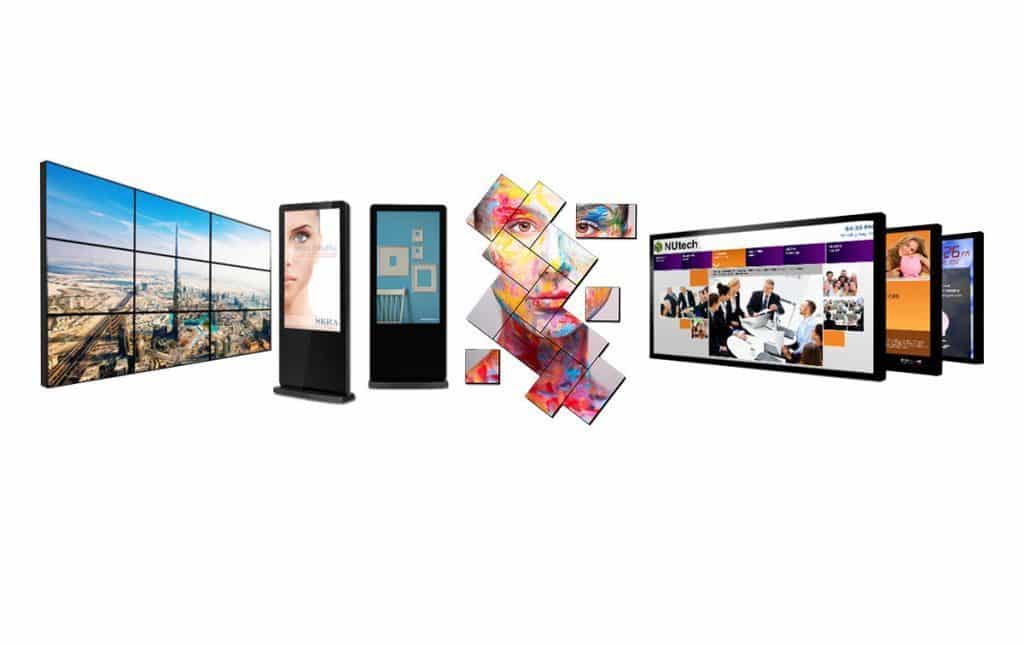
Digital signage has revolutionized the way businesses communicate with customers and employees. Traditional methods like printed posters, static banners, and bulletin boards are slow to update and often fail to capture attention effectively.
According to a study by Grand View Research, the global digital signage market was valued at USD 28.83 billion in 2024 and is projected to reach USD 45.94 billion by 2030, growing at a CAGR of 8.1% from 2025 to 2030. This growth reflects how organizations are increasingly adopting digital signage solutions such as digital menu boards, interactive kiosks, video walls, outdoor LED billboards, and transit displays to deliver dynamic content and engage audiences effectively.
Let’s explore the options and understand how each type of digital signage can support your business in sharing information, engaging audiences, and boosting visibility.
A. Indoor Digital Signage

Indoor digital signage allows businesses to share information, promotions, and announcements quickly across controlled environments. It enables real-time updates and helps organizations communicate effectively with customers and employees.
Common Locations:
Retail stores, restaurants and quick-service chains, corporate offices, hospitals, shopping malls, airports, educational campuses, and entertainment venues.
Use Cases for Indoor Digital Signage include:
- Restaurants using digital menu boards to display menus, pricing, and promotions
- Retail stores highlighting product launches, seasonal campaigns, and brand messaging
- Corporate offices sharing internal announcements, KPI dashboards, and meeting schedules
- Hospitals, malls, and campuses providing wayfinding and directory guidance
- Interactive kiosks for self-service ordering, check-ins, or information access
- Video walls in lobbies or event spaces delivering immersive visuals and live content
Indoor digital signage allows businesses to update content in real time, improve customer engagement, enhance internal communication, reduce reliance on printed materials, and maintain consistent messaging across multiple screens.
1. Indoor Digital Menu Boards
The food and beverage industry has moved from static menu boards to digital menu boards, transforming how businesses communicate with customers.
Common Location:Restaurants, cafés, food courts, and quick-service chains
Digital Menu Boards help you:
- Restaurants updating breakfast menus in the morning and lunch specials later in the day
- Cafés promoting seasonal drinks or limited-time offers
- Food courts highlighting combo meals or special discounts
- Quick-service chains rotating menu items and pricing in real time
Using digital menu boards helps reduce printing costs, improve order accuracy, increase customer engagement, and create a flexible, interactive dining experience.
2. Retail Promotional Displays
Retail stores are increasingly replacing static posters and signs with digital promotional displays to communicate more effectively with shoppers.
Common Location: retail outlets, supermarkets, shopping centers, and fashion stores.
Applications of Retail Promotional Displays:
- Showcasing new product launches at store entrances
- Highlighting seasonal campaigns throughout aisles
- Promoting brand messages and limited-time offers at checkout areas
- Rotating advertisements for different products or promotions in real time
Digital promotional displays provide real-time content updates, boost customer engagement, increase sales, and reduce printing costs.
3. Corporate Communication Screens
Corporate digital signage enables organizations to share information clearly and efficiently. These screens can display announcements, performance dashboards, meeting updates, and event schedules, helping employees stay informed across multiple locations.
How Corporate Communication Screens Are Used:
- Displaying key performance indicators (KPIs) in common areas
- Highlighting team achievements and milestones
- Sharing important reminders or deadlines
- Providing meeting room schedules and company news
Using corporate digital signage enhances internal communication, boosts employee engagement, fosters a connected workplace, and allows content to be updated in real time and customized for different teams or departments.
4. Wayfinding and Directory Signage
Wayfinding and directory signage are interactive digital displays that help visitors navigate complex spaces, replacing static maps and printed directories.
Common Location : shopping malls, hospitals, airports, corporate campuses, and educational institutions.
Uses of Wayfinding and Directory Signage:
- Guiding visitors through complex buildings or campuses
- Helping locate specific departments, stores, or services
- Showing real-time room schedules and event information
- Enabling searchable directories for quick access to information
Using wayfinding kiosks enhances the visitor experience, reduces confusion, shortens navigation time, and increases operational efficiency by delivering clear, real-time guidance throughout the facility.
5. Indoor Video Walls
Indoor video walls are large multi-screen setups that combine multiple displays into a single high-impact visual surface.
Common Locations: corporate environments, public venues, retail centers, and large event spaces.
Applications of Indoor Video Walls:
- Displaying live monitoring feeds in control rooms
- Showcasing promotions and store information in shopping malls
- Broadcasting live event coverage in entertainment venues
- Presenting immersive visuals in corporate lobbies
Using indoor video walls enhances visual impact, engages audiences effectively, supports real-time monitoring, and provides a centralized platform for managing and displaying multiple content streams.
6. Interactive Kiosks
Interactive kiosks are touch-enabled digital displays that let users access information or complete tasks independently.
Common Locations: retail stores, restaurants, airports, hospitals, and entertainment venues.
Uses of Interactive Kiosks:
- Ordering food in fast-food restaurants
- Purchasing tickets at cinemas or event venues
- Checking in for flights at airports
- Accessing patient information in hospitals
Interactive kiosks collect valuable data on user behavior, improve customer convenience, reduce wait times, increase operational efficiency, and provide a more engaging and personalized experience for users.
7. Shelf-Edge and Product-Level Displays
Shelf-edge and product-level displays are small digital screens positioned directly on shelves or near products to provide real-time pricing, promotions, and product information.
Common Locations: retail stores, supermarkets, electronics shops, and convenience stores.
How Shelf-Edge and Product-Level Displays Are Used:
- Automating price updates for products
- Highlighting ongoing promotions or discounts
- Displaying inventory-triggered product details
- Providing additional product information to assist customers
Using shelf-edge and product-level displays reduces pricing errors, enhances the customer experience, increases sales through targeted promotions, and enables centralized and efficient content management.
B. Outdoor Digital Signage

Outdoor digital signage refers to high-brightness, weather-resistant displays built for open environments where screens must withstand sunlight, rain, and temperature changes.
Common Locations: advertising spaces, transportation hubs, retail storefronts, hospitality venues, and entertainment districts.
Applications of Outdoor Digital Signage:
- Displaying public advertising and promotional campaigns
- Sharing city information and wayfinding guidance
- Broadcasting emergency alerts and safety messages
- Promoting events and time-sensitive offers
Outdoor digital signage enhances visibility, delivers real-time content updates, engages a broader audience, drives customer traffic, and provides a durable, flexible solution for communication and marketing.
1. Digital Billboards
Digital billboards are large, high-brightness screens designed for outdoor advertising and public messaging.
Common Locations: highways, commercial districts, shopping centers, and entertainment areas.
Applications of Digital Billboards:
- Showing multiple advertisements on a rotating schedule
- Promoting time-sensitive offers and campaigns
- Delivering content visible from hundreds of meters, even in bright sunlight
Using digital billboards increases brand visibility, reaches a wide audience, enables real-time content updates, drives customer engagement, and provides a flexible platform for targeted marketing.
2. Outdoor LED Display Boards
Outdoor LED display boards are large-format digital screens built with high-brightness LED technology, making content visible even in direct sunlight and outdoor conditions.
Common Locations: retail centers, stadiums, city authorities, entertainment venues, and event sites.
Use Cases of Outdoor LED Display Boards:
- Broadcasting advertisements and promotional campaigns
- Displaying event announcements and schedules
- Streaming live content, such as match updates or public events
- Sharing sponsor messages or important notifications to large audiences
Using outdoor LED display boards enhances message visibility in daylight, reaches large crowds simultaneously, supports real-time content updates, and delivers strong visual impact for advertising and public communication.
3. Drive-Thru Information Boards

Drive-thru information boards are outdoor digital displays designed to present menu items and ordering information to customers in vehicle service lanes.
Common Locations: fast-food restaurants, quick-service chains, coffee shops, and takeaway outlets.
Drive-Thru Information Boards help you:
- Showing digital menus with breakfast, lunch, or dinner options
- Highlighting combo offers and limited-time promotions
- Updating pricing and menu items instantly
- Rotating content automatically throughout the day
Using drive-thru information boards improves order clarity, speeds up service, reduces the need for manual menu updates, and allows restaurants to promote offers more effectively.
4. Transit and Transportation Displays
Transit and transportation displays are digital signage systems designed to deliver travel information and public announcements in busy transit environments.
Common Locations: airports, railway stations, metro systems, bus terminals, and public transportation hubs.
Uses of Transit and Transportation Displays:
- Show arrival and departure schedules in real time
- Communicate platform, gate, or route changes
- Provide service alerts and updates to travelers
- Guide passengers efficiently through busy terminals
Using transit displays improves passenger navigation, delivers real-time travel information, reduces confusion during schedule changes, and enables operators to communicate quickly with large numbers of travelers.
5. Mobile Digital Signage
Mobile digital signage includes portable displays mounted on vehicles or trailers, enabling businesses to reach audiences across multiple locations.
Common Locations: events, busy streets, pop-up retail setups, food trucks, and transportation routes.
Mobile Digital Signage helps you:
- Promote products and services at events or temporary setups
- Advertise along busy streets or high-traffic areas
- Display location-specific promotions and real-time updates
- Showcase menus, daily specials, or product launches while on the move
Using mobile digital signage expands audience reach, delivers targeted content, increases engagement, and provides a flexible solution for temporary or mobile marketing campaigns.
Get Started Today with Stream for Digital Signage Solutions
Get the digital signage solution with Stream by exploring its wide range of options designed for businesses in every industry. Stream supports retail stores, restaurants, corporate offices, hospitals, transportation hubs, educational campuses, and entertainment venues with a scalable platform to manage content scheduling, screen connectivity, and real-time updates across multiple displays. The solution connects media players, cloud-managed controls, and indoor and outdoor screens, enabling organizations to broadcast dynamic content efficiently and engage their audiences across all locations. Contact us to learn how Stream can transform your digital signage experience.
FAQ
-
What is digital signage?
Digital signage is a network of digital displays used to deliver dynamic content such as advertisements, announcements, menus, or information across indoor and outdoor environments.
-
What types of digital signage are available?
Digital signage is broadly divided into indoor and outdoor systems. Indoor solutions include menu boards, promotional displays, corporate screens, kiosks, and video walls. Outdoor options include LED display boards, digital billboards, drive-thru boards, transit displays, and mobile signage.
-
Which industries use digital signage?
Digital signage is used across retail, restaurants, corporate offices, healthcare, transportation, education, and entertainment to communicate with customers, employees, and the public.
-
How durable are outdoor digital signage solutions?
Outdoor displays are weather-resistant, high-brightness, and designed to operate in sunlight, rain, and extreme temperatures, making them suitable for public spaces and high-traffic areas.