In 2025, drive-thru operations are more critical than ever, with 70–80% of sales now coming through this channel for many Quick Service Restaurants (QSRs). At peak hours, even a single additional car per hour can translate to an extra $80K–$250K in annual revenue per store. However, outdated or low-quality drive-thru systems, including intercoms and headsets, can be a hidden profit killer.
Modern drive-thru intercom systems are the key to boosting both speed and accuracy. By reducing service time by 20–45 seconds per car, these systems not only improve throughput but also enhance customer satisfaction. Additionally, with advanced features like noise-canceling technology and order confirmation screens, order accuracy can improve by up to 80%. These enhancements lead to a direct, measurable return on investment, typically realized within 6–18 months. Upgrading to a modern system is one of the quickest ways to improve operational efficiency and capture lost revenue opportunities.
How Drive-Thru Communication Evolved
Drive-thru communication has dramatically improved over the years. From the 1980s to early 2000s, analog belt-pacs and wall-mounted speakers were the standard, often resulting in static-filled audio and frequent miscommunications.
By the 2010s, basic digital systems with minor noise reduction became more common. While they offered clearer sound, they still struggled to deliver consistent performance in noisy environments.
The 2025 standard introduces AI-enhanced noise cancellation, cloud-based reporting, order confirmation screens, and lightweight wireless headsets. These advancements ensure clear communication, reduce errors, and boost speed and accuracy, making modern systems a game-changer for drive-thru operations.
How Delays and Errors Turn Your Drive-Thru Into a Six-Figure Problem
In 2024–2025, the average drive-thru service time is 220–240 seconds, with order accuracy ranging from 82–88%. While these numbers may seem acceptable, even small delays and errors can lead to significant financial losses.
The cost of a single order error includes remakes, food waste, customer compensation, and the long-term loss of customer loyalty. A 10-second delay in service reduces throughput by 3–5%, directly impacting revenue. This means that during peak hours, even slight inefficiencies can translate into hundreds of thousands of dollars in lost sales.
Furthermore, communication failures often result in negative online reviews and mystery-shop penalties, which further damage a restaurant’s reputation and profitability. Addressing these issues with upgraded systems is essential to maintaining high customer satisfaction and protecting your bottom line.
How Modern Intercom Systems Dramatically Increase Speed
Modern intercom systems have revolutionized drive-thru operations by dramatically boosting speed. Features like active noise cancellation and echo reduction ensure that crew members hear clearly on the first try, preventing delays caused by miscommunication.
Vehicle detection sensors trigger greetings in under 5 seconds, resulting in a proven 1–3% sales lift. Combined with integrated speed-of-service timers and real-time dashboards, these systems help streamline the ordering process, enhancing efficiency and customer satisfaction.
Lightweight, all-day-battery wireless headsets allow for quicker movement and less fatigue, enabling staff to handle high volumes with ease. Real-world proof shows remarkable improvements: Taco Bell saw a 38-second reduction after upgrades, while Chick-fil-A consistently achieves 140–180 cars per hour. A Midwest chain even achieved a 47-second drop in just 90 days. These results highlight the immense potential for modern systems to increase drive-thru speed and productivity.
How Modern Systems Slash Errors and Boost Order Accuracy
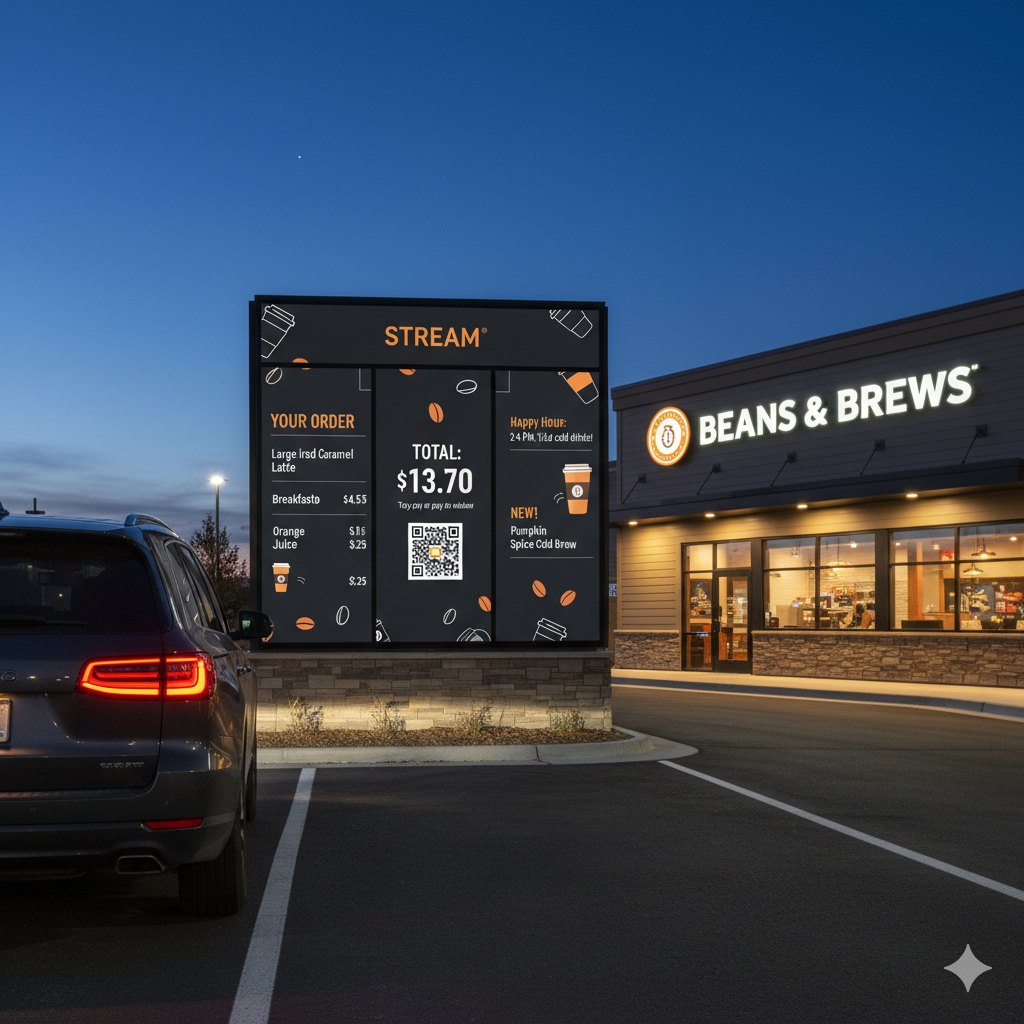
Modern drive-thru systems have revolutionized order accuracy, reducing errors from 1-in-5 orders to 98%+ accuracy. Key features such as order confirmation screens (OCS) at the menu board allow customers to verify their orders, preventing miscommunications before they happen.
Additionally, crystal-clear audio combined with digital signal processing (DSP) increases word recognition to 95–98%, compared to just 60–70% on older systems. This clarity, along with a greeter + dedicated order-taker workflow made possible by reliable headsets, ensures that each order is taken accurately and efficiently.
Real-world case studies show the impact: a regional burger chain reduced errors by 78% in just 90 days, while a Culver’s franchisee group saw remakes drop from 14% to less than 3%. These improvements lead to significant financial benefits, with less waste, fewer customer comps, and higher customer satisfaction (CSAT) scores, directly improving the bottom line.
What to Demand From a Modern Drive-Thru Intercom System Before You Spend a Dollar
Before investing in a new drive-thru intercom system, ensure it includes these essential features:
- Active noise cancellation (not just passive) for crystal-clear communication in noisy environments.
- Order confirmation display (OCS) so customers can verify their orders, reducing errors.
- All-day battery life with hot-swap charging to ensure continuous operation without downtime.
- Cloud-based reporting and voice analytics for real-time performance insights and error tracking.
- IP65 or better weather resistance to withstand outdoor conditions and ensure long-lasting durability.
- Dual-lane/tandem capability to handle high traffic during peak hours efficiently.
- Full POS and kitchen display integration to streamline the workflow and reduce delays.
- Modular design for future AI integration, allowing for easy upgrades as technology advances.
Also, be cautious of outdated systems that may show static, heavy headsets, no timers, or require frequent repairs; these are red flags indicating poor performance and higher maintenance costs.
Conclusion
In summary, the equation for an unstoppable drive-thru is simple: speed + accuracy + higher ticket sizes + happier guests and crew. Modern drive-thru systems are the key to achieving all of these elements, driving both operational efficiency and customer satisfaction.
Audit your current drive-thru times and error rate this week. If your service time exceeds 200 seconds or your order accuracy is below 90%, you’re leaving significant profits on the table every year. Upgrade to a modern system today to maximize throughput, minimize errors, and unlock your drive-thru’s full potential.
Frequently Asked Questions (FAQ)
-
How much does a new drive-thru intercom system cost in 2025?
The cost of a new drive-thru intercom system typically ranges from $18,000 to $45,000, depending on factors like whether it's a single or dual-lane setup and the brand chosen. High-end systems with advanced features tend to be at the higher end of this range.
-
Which drive-thru headset system is the fastest in real-world tests?
The current leaders in drive-thru headset systems, based on real-world tests, are 3M Attune HD, HME ION IQ, and Panasonic Attune IV. These systems are known for their speed, clarity, and overall performance.
-
How much can order confirmation screens reduce drive-thru errors?
Order confirmation screens can reduce order inaccuracies by 60–80%, allowing customers to visually confirm their orders before finalizing, minimizing the chances of mistakes.
-
Do noise-canceling headsets really make that big a difference in a noisy drive-thru?
Yes, noise-canceling headsets have a significant impact. Word recognition improves from about 65% on older systems to 95–98% on modern noise-canceling systems, drastically improving communication and reducing errors.
-
How quickly can a new drive-thru intercom be installed with minimal downtime?
Most vendors can install a new drive-thru intercom system in 1–3 days, with many offering overnight or off-hours installations to minimize disruption to your operation.
-
What’s the difference between analog and digital drive-thru intercoms?
Digital drive-thru intercoms offer superior clarity, speed, and advanced features compared to analog systems. They also require fewer repairs and have a longer lifespan, making them a more cost-effective choice over time.